Wadi Shawka Hike: Complete Guide to the Junction Node Loop Trail (2026)
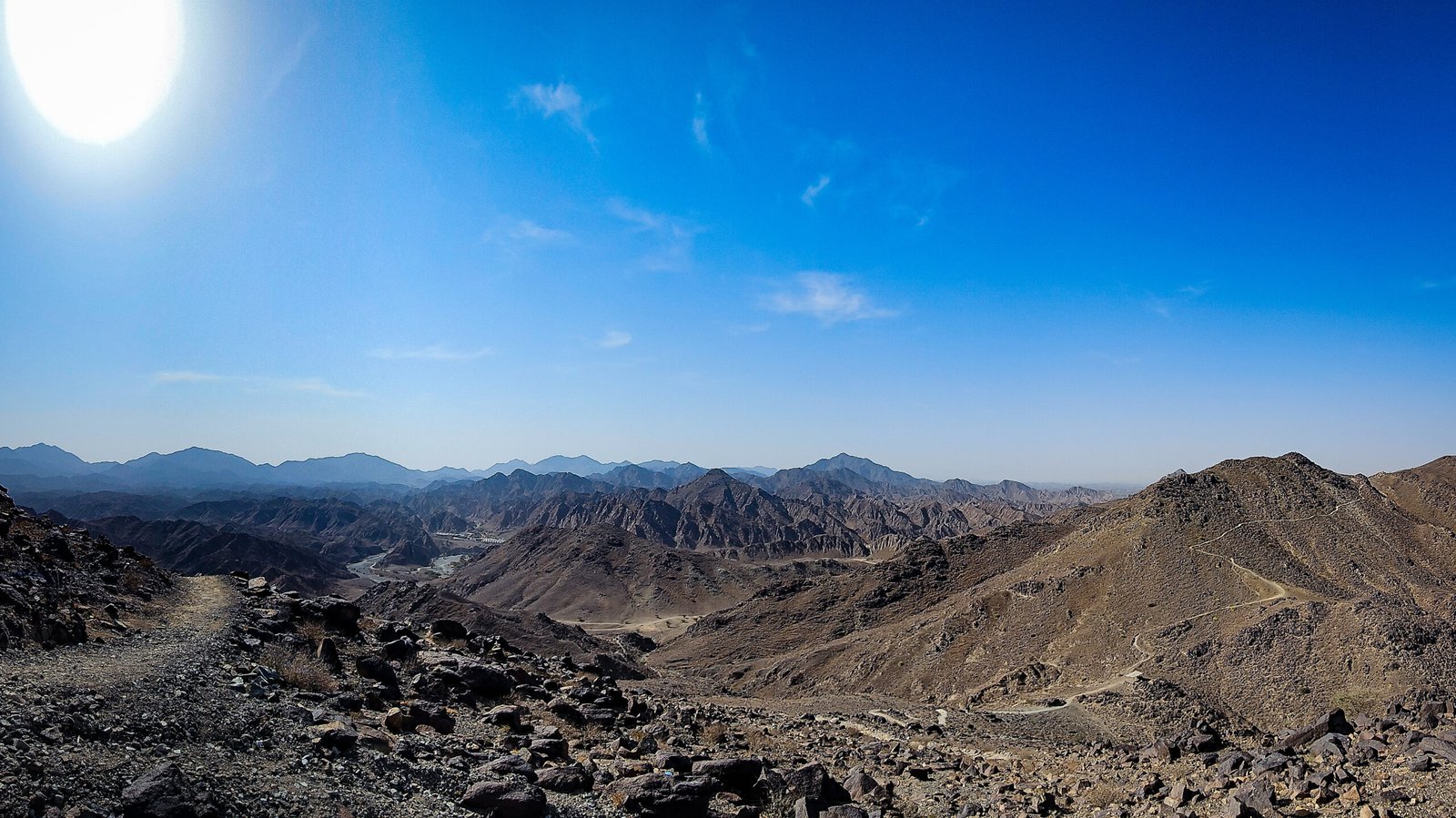
The Wadi Shawka hike offers one of the UAE’s most accessible mountain experiences, combining stunning Hajar Mountain views with well-maintained trails just 90 minutes from Dubai. Located in Ras Al Khaimah’s rugged landscape, this moderately challenging 7.6km loop presents hikers with panoramic vistas, fascinating geology, and the flexibility to customize their adventure through a unique junction node system. Whether you’re a weekend warrior looking for a half-day trek or a photographer seeking dramatic mountain scenery, this Wadi Shawka hike guide has everything you need. Furthermore, it offers essential tips to help you plan, prepare, and, most importantly, fully enjoy your adventure.
📚 Reading Time: 25-30 minutes | Last Updated: 03 June 2025
Table of Contents
ToggleWadi Shawka Trail Facts: Essential Hiking Information
| Feature | Details |
|---|---|
| Location | Wadi Shawka, Ras Al Khaimah, UAE |
| Trail Type | Junction node loop system (A1-A7) |
| Trail Length | 7.6km (complete loop) |
| Alternative Routes | 5-6km (connector shortcuts available) |
| Difficulty Level | Easy to Moderate |
| Estimated Hiking Time | 3-4 hours (complete loop) |
| Best Season | November - March |
| Starting Elevation | 262m above sea level |
| Maximum Elevation | 479m above sea level |
| Total Elevation Gain | 217m |
| Rest Areas | 6 strategically placed shelters |
| Trail Markers | Junction nodes A1 through A7 |
| Key Highlight | Panoramic Hajar Mountain views, Shawka Dam overlooks |
| Terrain Type | Rocky mountain paths, dry wadi beds, gravel sections |
| Water Sources | None available - bring 2-3L per person |
| Parking | Free parking for 50-60 vehicles |
| Beginner Friendly | Yes, with proper preparation |
| Family Suitable | Yes, children 3+ with shorter route options |
| Dog Friendly | Yes, popular with pet owners |
| Camping Allowed | Yes, free camping areas available |
FAQ: Wadi Shawka Common Questions Answered
How long is the Wadi Shawka hike?
The complete Wadi Shawka A1-A7 loop trail is 7.6km and typically takes 3-4 hours to complete. However, the trail features a well-marked junction node system that allows hikers to customize their route. Furthermore, shorter options are available using connector trails that reduce the distance to approximately 5-6km and hiking time to 2-2.5 hours.
Is Wadi Shawka hike difficult?
The Wadi Shawka hike is rated easy to moderate, making it suitable for beginners with basic fitness levels. Additionally, the trail features a manageable 217m elevation gain spread across seven strategically placed rest areas, well-maintained paths, and clear directional signage. Nevertheless, most hikers find the initial ascent moderately challenging, while the remaining trail is quite accessible.
What to do in Wadi Shawka?
Wadi Shawka offers hiking on multiple trail systems, scenic photography opportunities, wildlife viewing, and picnicking near Shawka Dam. The area features mountain biking trails, occasional natural pools after rainfall, and excellent stargazing opportunities. The junction node system provides flexibility for different activity levels and time constraints.
Is camping allowed in Wadi Shawka?
Yes, camping is permitted and popular in Wadi Shawka, with multiple free camping areas available near the dam and in surrounding valleys. The area offers basic facilities including restrooms near the main parking area, but campers must bring all supplies including water, food, and camping equipment. November through March provides the best camping conditions.
Can beginners hike Wadi Shawka?
Yes, Wadi Shawka is excellent for hiking beginners with reasonable fitness levels. The well-marked junction node system allows beginners to choose shorter route options, and the trail features seven rest areas with shade structures. First-time hikers should bring proper footwear, sufficient water (minimum 2-3 liters), and sun protection.
Is Wadi Shawka good for families with children?
Absolutely, Wadi Shawka is very family-friendly with children as young as 3 successfully completing shorter trail sections. The area features a children’s playground at the parking area, wide trail paths, and multiple rest stops. Families can customize their adventure using the connector trails to match children’s abilities and attention spans.
What should I bring to Wadi Shawka?
Essential items include hiking shoes with good traction, at least 2-3 liters of water per person, sun protection (such as a hat, sunglasses, SPF 30+ sunscreen), snacks or lunch, and a light backpack. Check my comprehensive gear guide for detailed equipment recommendations.
When is the best time to hike Wadi Shawka?
November through March offers optimal hiking conditions with temperatures between 22-25°C and clear skies. Early morning starts (6-9 AM) provide the best experience with comfortable temperatures and excellent lighting for photography. Summer months (May-September) are not recommended due to extreme heat exceeding 35°C. View detailed monthly hiking conditions for the UAE.
Is there water available at Wadi Shawka?
No reliable water sources are available along the Wadi Shawka trail. While Shawka Dam occasionally holds water after significant rainfall, it should not be relied upon as a drinking source. Hikers must bring all required water, and the area is currently undergoing dam construction (as of 2025).
Is Wadi Shawka dog-friendly?
Yes, Wadi Shawka is very dog-friendly and popular among pet owners in the UAE. Dogs enjoy the natural pools, wide trail paths, and opportunities for wildlife encounters. Dog owners should bring extra water for their pets, consider protective booties for rocky sections, and maintain leash control during wildlife encounters.
How far is Wadi Shawka from Dubai?
Wadi Shawka is located approximately 92km from Dubai, requiring a 1.5-hour drive via Emirates Road (E311) and Khorfakkan Road (S142). The route passes through scenic desert landscapes and requires no special vehicle – any standard car can access the main parking area. View detailed driving directions.
Where can I stay near Wadi Shawka?
Several accommodation options are available within 45 minutes of Wadi Shawka, including luxury mountain resorts, budget guesthouses, and free camping areas. JA Hatta Fort Hotel offers the closest premium option (45 minutes away), while free camping is available directly at Wadi Shawka with basic facilities. Explore all accommodation options from luxury resorts to camping sites.
Trail Overview: Navigation Guide to Wadi Shawka A1-A7 Loop
Main Trail Features & Junction Node System
The Wadi Shawka hike utilizes a clearly marked Junction Node System with numbered markers guiding hikers through the complete loop (A1 through A7). Moreover, a detailed information board at the trailhead provides a comprehensive map and details on available trail options. Subsequently, the trail follows natural mountain contours with sections of rocky terrain, natural steps, and gravel paths that showcase the diverse Hajar Mountain landscape.

GPS Navigation Track
For the most reliable navigation during your Wadi Shawka hike, I’ve recorded the exact route on Gaia GPS. Here’s a link to my recorded track on Gaia GPS. Following this GPS track ensures you stay on the correct path and allows you to monitor your own hiking statistics like elevation gain, average speed, and total distance in real time.

Checkpoints & Rest Areas
Six strategically placed rest areas along the route provide shade and scenic viewpoints for breaks. Key checkpoints include the directional signposts at each of the seven junctions along the trail.


Elevation Profile & Trail Difficulty
Quick Stats
- Starting Elevation: 262m
- Max Elevation: 479m
- Elevation Gain: 217m
Trail Sections
Trailhead to 3rd Rest Area (Summit)
- The most challenging section where most of the climing is done.
- Elevation gain: 262m → 467m.
- Technical summit location.
Summit to A5 Junction
- Quick descent: 467m → 395m (4th junction signpost).
- Sharp climb: 395m → 479m (trail’s highest point near 4th rest area).
- Final descent: 479m → 338m (5th rest area at A5 junction).
A5 to A7 Junction
- Gentle terrain with minimal elevation change.
- Elevation range: 300m – 360m.
- No extreme gains or losses.
Rest Stop Elevation Profile (Interactive)
No Data Found
Alternative Routes & Return Options
The Junction Node System allows hikers to customize their adventure with several shortcut options:
- Shorter Loop: A1 – A2 – A3 – A9 – A7 – A1 (approximately 5.5km)
- Easiest Loop: A1 – A2 – A3 – A8 – A7 – A1 (approximately 6km with less elevation)
My Experience: Wadi Shawka Hike - A1 - A7 Loop
Early Morning Departure & Perfect Hiking Weather
On February 22nd, 2025, my wife and I set out to explore the Wadi Shawka hike, with our dog Willem tagging along as our four-legged hiking companion. We pulled into the trailhead parking lot (marked as “TH” on the official map) around 08:20, finding it already hosting more than 50 cars. Still, we managed to snag a spot without much trouble, perhaps just good timing on our part.
The weather couldn’t have been more cooperative – low 20°C with clear skies that stretched endlessly above the rugged landscape. Perfect hiking conditions by UAE standards.

Trail Conditions & Peaceful Mountain Atmosphere
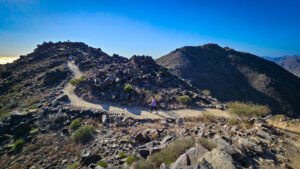
As we began our ascent along the A1 section, we encountered a few trail runners making their way down as we were climbing up. Despite the packed parking lot that might have suggested otherwise, the trail itself felt surprisingly uncrowded. We passed other hikers throughout our journey, but at no point did it feel congested. Both my wife and I were struck by the peaceful atmosphere and the stunning panoramic mountain vistas that unfolded with each bend in the path.

The hike presented a moderate challenge, with several sections that had us working up a decent sweat. Willem’s pace dictated our own – we stopped frequently to let him rest and made sure he was lapping up enough water. Dog parenting on the trail is no small responsibility, especially under the UAE sun.
Reaching the Summit & Navigation Challenges
We reached the 3rd rest area at the summit around 09:15, having climbed about 205 meters from the trailhead.
After the 4th rest area at the 3.6km mark, the trail begins a steep descent toward the 5th rest area at the A5 junction sign, where we decided to have breakfast at around 10:30.

This is where things get… interesting. The trail suddenly throws a 4-way intersection at you—like a choose-your-own-adventure moment with no instructions. We picked the wrong path (rookie move, I know), but we quickly realized something felt off and backtracked to the A5 junction signpost.
Navigation Tips for Fellow Hikers
Here’s how to stay on track (If you’re not already following my Gaia GPS track):
- When you hit the A5 sign, don’t overthink it—just keep going straight (that’s west on the map) toward the A6 junction. No lefts, no rights, no regrets.


A few meters behind the A6 junction signpost, you’ll spot another informational sign displaying the trail map (similar to the one in the parking lot), and just behind that, the trail continues its winding journey into the mountain. Follow this path and it will guide you toward the A7 junction at the Shawka Dam parking lot.

Willem's Mountain Adventure & Dam Construction
By this stage of the hike, Willem had clearly reached his limit. Our puppy began staging dramatic protests, refusing to walk another step, which meant we ended up carrying him for most of the final stretch between junctions A6 and A7. Talk about adding an extra workout to the hike!
This section normally offers impressive views of Shawka Dam, but on this particular day, it was completely empty and undergoing construction. Multiple heavy vehicles were working inside the basin, with diggers loading dirt into trucks that then hauled it away. It appeared they were deepening the dam, though I couldn’t find any official information about the construction project afterward.

Completing the Loop & Trail Reflections
We finally reached the A7 junction signpost at Shawka Dam at 12:10 and made it back to our starting point around 12:30, completing the loop with a tired pup and satisfied smiles.

Overall, the Wadi Shawka hike delivered a genuinely satisfying hiking experience—moderately challenging, remarkably peaceful despite its popularity, and offering beautiful mountain scenery throughout. The trail maintenance is excellent, with plenty of rest areas strategically placed along the route.
What makes this trail particularly appealing is the ‘Junction Node’ system that allows hikers to customize their adventures. You can tackle certain segments while skipping others based on your fitness level or time constraints—making it accessible for various experience levels. The Wadi Shawka hike is one of the more developed and popular trails in the UAE, offering a well-maintained path with clear signage throughout. It strikes a nice balance between accessibility and challenge, making it a solid addition to your UAE hiking checklist if you’re looking for a structured trail with the flexibility to tailor the experience to your preferences.
Seasonal Considerations for UAE Hiking
Winter—especially from December to February—offers the most comfortable hiking conditions for the Wadi Shawka hike, with moderate temperatures, occasional cloud cover, and the rare rainfall that brings the landscape to life with temporary water features and seasonal plant growth. Early spring (March–April) can still be great for early morning hikes, as long as you take precautions against rising temperatures. For a detailed breakdown, check out my comprehensive UAE seasonal weather guide for hikers.
Driving Instructions & Tips
Wadi Shawka Trailhead Location
The main starting point for the Wadi Shawka hike is located in Ras Al Khaimah emirate, approximately 1-1.5 hours from Dubai. You can find the exact trailhead parking location on Google Maps here. This is where all the directions below will guide you.
Key Routes Summary
| From | Distance | Time | Main Route |
|---|---|---|---|
| Dubai | 92km | 1h 30m | E311 → Shawka/Manama Exit → Signs to Wadi Shawka |
| Abu Dhabi | 270km | 2h 45m | E11 → E311 → Shawka/Manama Exit → Signs to Wadi Shawka |
| Sharjah | 83km | 1h | E88 (Sharjah-Kalba Road) → Masafi → Signs to Wadi Shawka |
| Al Ain | 180km | 2h | Route 66 → Dhaid → E88 → Masafi → Signs to Wadi Shawka |
Tips on Salik Passes, Fuel Stations & Scenic Routes
No Salik toll gates exist on the direct route to Wadi Shawka from any major city. However, fill your vehicle before heading to the mountains, as fuel stations are limited in the area. Additionally, the most reliable options are in Masafi or along E311 before exiting toward Shawka. Furthermore, the drive through Hajar Mountains offers spectacular photo opportunities, especially during early morning or late afternoon when lighting enhances the dramatic rock formations.
Parking Instructions
The primary parking area at the main trailhead (TH) accommodates approximately 50-60 vehicles with no fees or time restrictions. During peak hiking season (November – March), weekend parking typically fills by 9:00 AM, so arrive early to secure a spot. A secondary parking area is available near Wadi Shawka Dam by the A7 trail marker if the main lot is full.

Wadi Shawka Trail-Specific Safety Information
Essential Actions Before You Hike:
- Save emergency contact numbers to your phone before departure.
- Inform someone about your hiking plans and expected return time.
- Carry a comprehensive first aid kit for remote area hiking.
For complete UAE emergency contact information, including police (999), ambulance (998), coastguard (996), and National Search and Rescue Center, check out my comprehensive emergency contact guide.
Primary Trail Hazards
Heat Exposure Dangers
- Limited shade available on most trail sections.
- Early morning starts are essential even during cooler months (November-March).
- Symptoms to watch for: Heat exhaustion, dehydration, and heat stroke.
Flash Flood Risk
- Highest Priority Safety Concern: Wadi beds can fill rapidly with fast-moving water during and after rainfall.
- Critical Rule: Never attempt to cross flowing wadis under any circumstances.
- Prevention: Check weather forecasts before departing and monitor conditions throughout your hike.
Terrain-Specific Challenges
High-Risk Trail Sections
- Loose gravel areas: Between junctions A2-A3 (increased fall risk).
- Steep descent zones: Near junction A6 (requires extra caution).
- Rocky, uneven surfaces: Throughout the entire trail.
Essential Safety Equipment
- Proper hiking footwear: Ankle support and aggressive tread required.
- Trekking poles: Highly recommended for stability during descents.
- Navigation tools: Smartphone with GPS app like Gaia GPS, and a fully charged power bank.
Wildlife Safety Awareness
Potentially Dangerous Species
- Arabian hornvipers (venomous snake species).
- Scorpions (seek shelter under rocks during the day).
- Various desert-adapted reptiles (generally avoid human contact).
Wildlife Safety Protocols
- Before sitting: Visually inspect rocky areas and shade spots.
- Hand placement: Avoid placing hands on rocks without looking first.
- Peak activity times: Exercise extra caution during warmer parts of the day.
- General rule: Wildlife typically avoids human contact but may seek shade in the same areas.
Hydration & Nutrition for Hiking in the UAE
Even during winter (November–March), the UAE’s dry desert air, rocky terrain, and sun exposure demand proactive hydration and fueling. Water is essential—but not enough on its own.
Water Requirements
| Tip | Why It Matters |
|---|---|
| Bring at least 1L/hour | Base rule—adjust based on heat, trail difficulty, and personal sweat rate. |
| Minimum of 3L per hike | For moderate hikes, bring at least 3L per person. Bring more for long, challenging and exposed trails. |
| Use a hydration bladder | Makes it easy to sip consistently without stopping to take your water bottle out of your backpack. |
| Keep it cool | Store your bladder or bottle in the fridge overnight to start with cold water. |
| No natural water sources | Don't expect refill opportunities on UAE trails. Pack everything you’ll need. |
Electrolyte Supplement Options
Water alone won’t cut it on long or hot hikes. Specifically, when you sweat, you lose critical electrolytes like sodium, potassium, and magnesium, which need to be replaced to avoid cramps, fatigue, and decreased performance.
| Electrolyte Product | Form | Benefits |
|---|---|---|
| LMNT | Powder sachet | Built for heavy sweat loss, this zero-sugar, high-sodium formula supports Paleo, keto, vegan, and gluten-free lifestyles. |
| Gatorade | Bottled | Readily available, contains electrolytes, carbs, and sugar. Bulky to pack. |
| Nuun / other tablets | Dissolvable tabs | Light, easy to carry; sugar-free or low-sugar options available. |
| Coconut water | Bottled/canned | Natural drink. Contains potassium, sodium, and sugar. Bulky to pack. |
Pro Tips for Electrolyte Supplementation
Keep electrolyte drinks in a separate container from your water for on-demand use.
Freeze a Gatorade bottle overnight so it melts gradually and stays cold on the trail.
LMNT is great for those who sweat heavily or follow low-carb diets and want maximum sodium without sugar.
Energy-Rich Trail Foods
Fuel is just as crucial as hydration. Aim for a blend of quick carbs, sustained fats, and some salt to maintain energy levels.
| Purpose | Trail Food Ideas |
|---|---|
| Quick energy + Salt | Trail mix (salted nuts, dried fruit, chocolate). |
| Sustained energy (Carbs + Fat) | Energy bars, nut butters, granola bars. |
| Muscle support (Protein) | String cheese, jerky, hard-boiled eggs. |
| Potassium boost | Bananas |
| Filling mini-meal | Sandwiches: Peanut butter & honey, Marmite & cheese. |
Essential Gear for Hiking in UAE
When hiking in the UAE’s beautiful but challenging terrain, having the right gear can make the difference between an enjoyable adventure and a miserable experience. Therefore, this comprehensive guide covers everything you need for safe, comfortable day hiking in the Emirates.

Footwear: The Foundation of Your Hike
Footwear is arguably the most important gear choice for any hike—comfort and safety start from the ground up.
Hiking Footwear Comparison
| Feature | High-Cut Hiking Boots | Mid-Cut Hiking Boots | Low-Cut Hiking Shoes | Trail Runners | Approach Shoes |
|---|---|---|---|---|---|
| Ankle Support | Excellent | Moderate | Low | None | None |
| Breathability | Low | Fair | Good | Excellent | Fair |
| Flexibility | Low | Medium | High | High | High |
| Traction | Excellent | Good | Good | Moderate | Excellent (on rock) |
| Weight | Heavy | Medium | Light | Light | Medium |
| Protection | Excellent | Good | Moderate | Minimal | Limited |
| Break-in Time | Long | Moderate | Short | None | Short |
| Best For | Multi-day treks, alpine, off-trail | Day hikes or short trips with moderate packs | Day hikes, moderate terrain | Groomed trails, fastpacking, dry climates | Rocky scrambles, hybrid hike/climb routes |
For day hiking in the UAE during the winter season (November – March), conditions are typically dry, warm-to-mild, and the terrain is rugged, rocky, and exposed. Consequently, here’s what I’d prioritize in terms of footwear features:
Top Footwear Features to Prioritize for Day Hiking in UAE
| Feature | Reason |
|---|---|
| Breathability | Winter temperatures in the UAE can still reach 25–30°C by midday. Your feet need ventilation. |
| Grip/Traction | Rocky trails, loose gravel, and steep descents are common in areas like Jebel Jais or Wadi Shawka. Vibram soles or other aggressive tread patterns are ideal. |
| Light-to-Mid Weight | Heavy boots are overkill for a day hike in dry, non-snowy conditions. Light = less fatigue. |
| Comfort & Cushioning | Trails are hard underfoot (rocky and compacted), so shock absorption is important. |
| Moderate Protection | Reinforced toe caps and rock plates help protect from sharp rocks and scree. |
| Support (Optional) | If you’re prone to ankle rolls, mid-cut hiking boots are a good compromise. Otherwise, hiking shoes or trail runners work. |
What You Don’t Need for UAE Day Hikes
Waterproofing: Most hikes are dry and waterproof membranes reduce breathability.
Heavy Insulation: It’s not cold enough to justify it, even early in the morning.
High-Cut Boots: Unless carrying a heavy pack or going off-route scrambling, they’re often unnecessary.
Best Footwear Types for UAE Day Hikes
Trail Runners: Ideal for fit hikers on defined trails who prioritize breathability and speed.
Low-Cut Hiking Shoes: Best balance of breathability, traction, and foot protection.
Mid-Cut Hiking Boots: Great if you want added ankle support, especially on uneven, rocky terrain.
Hiking Socks: What You Need for UAE Trails
Why Socks Matter
The right socks are just as important as your boots or shoes. In dry, rocky terrain like the UAE’s wadis and mountains, socks help:
Prevent blisters
Manage sweat
Add cushioning on hard surfaces
Regulate foot temperature during early morning cold or midday warmth
Best Sock Features for Day Hiking in UAE
| Feature | Why It Matters |
|---|---|
| Moisture-Wicking | Sweat can cause blisters even in cooler months. Dry feet = happy feet. |
| Breathability | Keeps feet cool in fluctuating desert temps. |
| Light-Mid Cushioning | Adds comfort on rocky trails without overheating your feet. |
| Seamless Toe | Prevents friction hotspots and blisters. |
| Height | Offers ankle protection against minor scrapes, scuffing, and abrasions. |
Ideal Fabric Blend (Per Pair)
Look for hiking socks with the following fabric ratio:
50–70% Merino Wool – Naturally moisture-wicking, odor-resistant, and temperature-regulating.
20–30% Nylon/Polyester – Adds durability and helps dry faster.
3–5% Spandex/Elastane – Gives the sock stretch and shape retention.
Pro Tip: Bring a Spare
Always pack an extra pair of socks in your daypack. If your feet get sweaty, changing into a dry pair can prevent blisters and make your descent far more comfortable.
Sun Protection for Hiking in the UAE
Even in winter, the UAE sun is intense, especially on exposed trails with little to no shade. UV rays reflect off light-colored rock and sand, increasing your exposure. Smart sun protection helps prevent sunburn, fatigue, and long-term skin damage.
Essential Sun Protection Items
| Item | Why You Need It |
|---|---|
| Wide-Brim Hat | Shields your face, ears, and neck from direct sun. Brimmed hats offer the most coverage. |
| UV Sunglasses | Protect your eyes from glare and UV rays, especially in high-exposure wadis or rocky areas. |
| UPF Clothing | Long sleeves, long pants, or tights made with UPF-rated fabric reduce sunscreen dependence. |
| Sunscreen (SPF 30+) | Apply to exposed skin, especially face, hands, and neck. Use water-resistant formulas and reapply every 2–3 hours, especially after sweating. |
| Lip Balm with SPF | Often overlooked. Prevents sun-chapped lips in dry desert air. |
| Neck Gaiter or Buff | Versatile—can be worn around the neck, face, or under your hat for added sun coverage or protection from dust in windy conditions. |
Pro Sun Safety Tips for Hiking in UAE
Start early: Begin your hikes at or just after sunrise to avoid strong midday UV.
Reapply sunscreen even if it’s cloudy or cool—UV is still strong in desert climates.
Choose moisture-wicking UPF fabrics to reduce the need for heavy sunscreen on your body.
Use polarized lenses to cut glare from sand and rock.
Always choose water- and sweat-resistant sunscreen, and reapply after heavy perspiration or wiping your face.
Day Hiking Backpacks Suitable for UAE Trails
A well-chosen backpack can significantly impact your day hike in the UAE, helping you manage the heat and carry your essentials without strain.
Essential Features to Consider When Picking a Day Hiking Pack for UAE Trails
| Feature | Why It Matters |
|---|---|
| Capacity (20–30L) | Enough space for water, snacks, layers, power bank, and a first aid kit. |
| Ventilated Back Panel | Crucial for airflow and reducing back sweat. Look for mesh or suspended trampoline-style panels (e.g., Osprey’s AirSpeed). |
| Hydration Bladder Compatibility | Internal sleeve + ports for hydration bladders make sipping water on the move effortless. |
| Hip Belt & Sternum Strap | Helps distribute weight and stabilize the pack on uneven terrain. |
| Hip Belt Pockets | Ideally large enough to fit a smartphone (Android/iOS), trail snacks, lip balm, or electrolyte tabs for quick access. |
| Multiple Compartments | Keeps essentials organized and easily accessible (e.g., sunscreen, first aid items, extra layers). |
| Compression Straps | Cinch down extra space for better load balance and stability. |
Navigation Essentials for Day Hiking in the UAE
You don’t need to be an expert navigator to hike safely — but a few simple tools and habits can prevent wrong turns and wasted time. Even on well-traveled UAE trails, it’s worth being prepared.
| Tool | Why It Matters |
|---|---|
| Navigation App (e.g., Gaia GPS) | Use for real-time trail tracking, elevation data, and other hiking-related stats. Note: offline map downloads are a premium feature and require a paid subscription. |
| Photo of Trailhead Map | Take a photo of the official signboard map — great as a backup or quick reference if your app fails or you lose signal. |
| Power Bank | Keeps phone charged for navigation and emergencies. Critical for GPS use and emergency calls, especially on longer hikes. |
Trekking Poles: Support, Stability & Efficiency on the Trail
Trekking poles are one of the most underrated pieces of hiking gear — until you use them. Whether you’re climbing steep ascents, descending rocky switchbacks, or simply covering long distances, they can significantly reduce strain on your knees and improve overall stability, especially with a loaded pack.
Benefits of Trekking Poles
Reduces Impact on Joints: Especially helpful during long descents.
Improves Balance: Useful on uneven terrain, water crossings, and loose scree.
Enhances Endurance: Distributes the workload across arms and legs, lowering fatigue.
Aids in Uphill Efficiency: Helps push off and drive forward when climbing.
Increases Hiking Pace: Engages the upper body to maintain rhythm and momentum, making it easier to sustain a steady pace.
Assists in Probing: Check water depth, snow firmness, or hidden holes in the trail.
Trekking Pole Style Comparison
| Feature | Collapsible (Z-Pole) | Telescopic | Flick/Clamp Lock |
|---|---|---|---|
| Compactability | Excellent (avg. 35–40 cm) | Moderate (avg. 50–55 cm) | Poor (avg. 60–65 cm) |
| Durability | Moderate (moving parts) | Low (more moving parts) | High |
| Adjustability | Fixed or limited | Fully adjustable | Fully adjustable |
| Setup Speed | Moderate | Slowest | Fastest |
| Stability | Moderate | High | High |
| Best Use | Fast hiking, trail running | All-purpose, reliable in rough terrain | All-purpose, reliable in rough terrain |
Pole Material Comparison
| Feature | Aluminium | Carbon Fiber |
|---|---|---|
| Weight | Heavier | Lightweight |
| Durability | High flex, bends under stress | Brittle under high stress, can shatter |
| Shock Absorption | Good | Excellent |
| Cost | More affordable | More expensive |
| Best Use | Rough terrain, general hiking | Long-distance hikes, ultralight setups, trail running |
| UAE Terrain Compatibility | Ideal — handles rocky and technical surfaces well | Use on well-maintained trails |
Recommended Grip, Strap & Tip Features
Grip: Cork is Best
Cork grips are widely considered the most comfortable and reliable option. They naturally absorb moisture and mold to the shape of your hand over time, providing a custom fit and excellent control. Unlike rubber, cork doesn’t become slippery when your hands sweat — a major advantage in hot, dry UAE conditions.
Straps: Prioritize Comfort & Adjustability
Look for straps that are padded and easily adjustable. Well-designed straps reduce hand fatigue on longer hikes by distributing pressure more evenly and giving you a relaxed grip while maintaining control of the pole.
Tips: Go for Tungsten Carbide + Accessories
Tungsten carbide tips are the standard for durability and traction on rugged terrain. However, for the best versatility, choose poles that come with additional tip accessories:
Rubber Tips: Ideal for hard surfaces like tarmac, gravel roads, and rocky ground where carbide tips may slip or get damaged. They reduce trail noise, protect your backpack from sharp ends during storage, and offer added shock absorption.
Rubber Feet: These angled attachments improve forward propulsion, grip, and stability. Great for boosting momentum and reducing vibration on long, hard-packed sections.
Mud/Snow Baskets: While essential in snow, they’re also surprisingly useful in loose sand or soft dune areas — helping prevent your poles from sinking too deep into the terrain.
Key Takeaways: Trekking Poles for UAE Terrain
- Best Style: Flick/Clamp Lock – durable, adjustable, and fast to deploy.
- Best Material: Aluminum – handles rocky, harsh terrain better.
- Best Grip: Cork – sweat-wicking and comfortable in the heat.
- Best Tip: Concave carbide – maximum grip on rock and gravel.
- Straps: Padded and adjustable for comfort on longer hikes.
- Additional Attachments: Rubber tips and shoes for different surfaces; mud baskets for muddy or sandy terrain.
Geology of Wadi Shawka & The Hajar Mountains
Ancient Origins of UAE's Mountain Landscape
The Hajar Mountains surrounding Wadi Shawka represent one of the world’s most significant ophiolite sequences, offering hikers a rare opportunity to walk on ancient ocean floor. This remarkable geological formation tells a story spanning nearly 100 million years of Earth’s history.
Formation Timeline & Process
Age: 95-96 million years ago (Late Cretaceous period)
Formation Process:
- Tethys Ocean closure – Ancient ocean began contracting between continental plates
- Oceanic crust uplift – Ocean floor and upper mantle thrust dramatically upward
- Obduction process – Rare geological event forcing oceanic material onto land
- Global significance – Created the world’s best-preserved ophiolite complex
This extraordinary process means that hikers at Wadi Shawka are literally walking on what was once the bottom of an ancient sea, making every step a journey through deep geological time.
Rock Formations & Trail Features
The Wadi Shawka trail showcases multiple distinct geological layers, each representing different environments from Earth’s ancient past. Understanding these formations enhances appreciation for the landscape’s remarkable geological heritage.
Primary Rock Types Along the Trail
Deep Earth Materials:
- Peridotite – Ultramafic rocks originating from Earth’s mantle.
- Gabbro – Coarse-grained igneous rock formed in magma chambers.
Oceanic Crust Evidence:
- Sheeted dike complexes – Vertical rock formations from underwater volcanic activity.
- Pillow lavas – Rounded rock formations from submarine volcanic eruptions.
Fascinating Microfeatures for Hikers
Surface Weathering Patterns:
- Desert varnish – Dark manganese-rich coating creating distinctive rock coloration.
- Tafoni formations – Honeycomb-like erosional features carved by wind and water.
- Solution pits – Chemical weathering creates small depressions in rock surfaces.
Best Viewing Locations: The most impressive geological features are particularly visible near the A3 junction, where exposed rock faces display millions of years of geological history in dramatic cross-section.
Geological Significance & Global Context
The Wadi Shawka area provides exceptional educational value for understanding both local and global geological processes.
For comprehensive information about the geological formation, tectonic origins, and broader cultural heritage of the Hajar Mountains, including detailed explanations of ophiolite formation and regional geological history, explore the complete geological guide in my Al Rabi Trail article.
Educational Opportunities
Field Geology Experience:
- Hands-on learning – Touch and examine rocks formed in Earth’s deep interior.
- Time travel – Experience landscapes from ancient ocean environments.
- Comparative study – Observe how different rock types weather and erode.
- Photography opportunities – Capture unique geological formations and textures.
Scientific Importance:
- Research value – Internationally recognized geological reference site.
- Educational significance – Natural laboratory for understanding Earth processes.
- Conservation importance – Preserve geological heritage for future generations.
Fauna & Flora of Wadi Shawka
The Master of Mountain Camouflage: East Arabian Desert Agama Wildlife Encounters

Our Personal East Arabian Desert Agama Encounter at Wadi Shawka
During our February 2025 Wadi Shawka hike, we were fortunate to observe one of the UAE’s most fascinating endemic reptiles, the East Arabian Desert Agama (Pseudotrapelus jensvindumi), locally known as the Hajar Rock Agama. This remarkable lizard was perfectly camouflaged against the sun-warmed rocks, demonstrating the extraordinary adaptations that allow it to thrive in the Hajar Mountains ecosystem.
UAE: Home to an Ancient Mountain Endemic Species
Distribution & Habitat
The East Arabian Desert Agama represents a true conservation success story found exclusively in the rocky terrain of the Hajar Mountains. These specialized rock-dwelling lizards inhabit elevations ranging from coastal areas up to 1,000 meters throughout the mountain range.
Key Distribution Facts:
- Endemic Range: Exclusive to Hajar Mountains between Oman and UAE.
- Elevation Range: Sea level to 1,000 meters above sea level.
- Habitat Type: Rocky outcrops, boulder fields, gravel plains.
- Conservation Status: Stable populations with strong climate resilience.
Ancient Evolutionary Heritage
Scientific research indicates that these agama species represent ancient lineages that have called Arabia home for over 5 million years. What makes this population particularly remarkable is their exceptional climate resilience—unlike many desert species facing habitat challenges, the East Arabian Desert Agama shows strong adaptation to changing environmental conditions with stable future population projections.
Spectacular Breeding Season Color Transformations
Male Breeding Coloration
During breeding season, these lizards undergo dramatic visual transformations that rival any wildlife spectacle in the UAE. Mature males develop stunning bright blue coloration across their heads and bodies, while females display rich brown bodies adorned with distinctive orange and red markings. This remarkable color change serves crucial purposes in mountain wildlife communication and territorial establishment.
Breeding Season Characteristics:
- Males: Brilliant blue head and body during peak breeding.
- Females: Earth-toned brown with vibrant orange/red accent spots.
- Purpose: Territorial dominance and mate selection displays.
- Timing: Most pronounced during optimal breeding conditions.
Remarkable Behavioral Adaptations for Desert Survival
Territorial Behavior & Communication
Both male and female East Arabian Desert Agamas exhibit sophisticated territorial behaviors, utilizing distinctive head-bobbing displays to establish dominance hierarchies and communicate with rivals. These complex behavioral patterns demonstrate remarkable intelligence and social organization among UAE mountain wildlife.
Territorial Display Behaviors:
- Head-bobbing: Primary method of territorial communication.
- Color intensification: Breeding colors signal dominance status.
- Tail displays: Secondary threat and warning behaviors.
- Strategic positioning: Males select prominent rocks for maximum visibility.
When initial displays prove insufficient, territorial disputes escalate through tail lashing and aggressive posturing with open mouths, showcasing their powerful jaw capabilities.
Extraordinary Temperature Regulation
These remarkable lizards have evolved exceptional thermoregulation strategies that allow them to remain active during extreme desert heat when most other reptiles seek shelter. When rock surfaces become dangerously hot, they demonstrate ingenious behavioral adaptations by elevating their bodies on extended legs to create cooling air gaps, and when temperatures exceed their tolerance, they strategically retreat to shaded rock crevices.
Thermoregulation Strategies:
- Leg Elevation: Lifting body off superheated rock surfaces.
- Microhabitat Selection: Strategic use of rock crevice shade.
- Heat Tolerance: Active functionality at temperatures approaching 38°C (100°F)
- Activity Timing: Peak activity during optimal temperature windows.
Specialized Hunting Equipment & Diet
Physical Adaptations for Feeding
East Arabian Desert Agamas possess remarkable hunting adaptations perfectly suited for their rocky mountain environment. Their powerful jaws feature specialized incisor-like front teeth designed for processing large, hard-bodied prey items that other lizards cannot handle.
Hunting Adaptations:
- Specialized Dentition: Sharp, incisor-like teeth for tough prey.
- Visual Hunting: Exceptional eyesight for spotting movement on rocks.
- Primary Diet: Insects, beetles, and small arthropods.
- Feeding Strategy: Patient ambush predation from strategic rock perches.
Conservation Success Story & Environmental Significance
Climate Resilience & Population Stability
The East Arabian Desert Agama serves as an important environmental indicator species for healthy Hajar Mountain ecosystems. Current research suggests these populations demonstrate exceptional climate resilience, with habitat modeling indicating stable future distributions despite changing environmental conditions affecting other regional species.
Conservation Highlights:
- Population Status: Abundant and stable throughout natural range.
- Climate Adaptation: Strong resilience to environmental changes.
- International Recognition: Featured in global wildlife conservation photography projects.
- Research Value: Important subject for Middle Eastern reptile ecology studies.
Best Viewing Tips for Wadi Shawka Hikers
Peak Viewing Times:
- Best Hours: 9:00-11:00 AM during mid-morning basking periods.
- Optimal Weather: Clear, sunny days following cool overnight temperatures.
- Activity Indicators: Watch for characteristic head-bobbing territorial displays.
Strategic Viewing Locations:
- Rock Clusters: Exposed boulder formations along the A1-A7 trail system.
- Sun-Facing Slopes: South-facing rocky areas with morning solar exposure.
- Trail Junctions: Rocky terrain near designated rest stops and scenic viewpoints.
Photography & Observation Tips
- Approach Method: Move slowly and maintain quiet movements to avoid disturbance.
- Observation Distance: Maintain a distance of 2-3 meters for natural behavioral observations.
- Behavior Recognition: Head-bobbing indicates active territorial communication.
- Retreat Awareness: Sudden movements trigger immediate retreat to rock crevices.
These lizards maintain abundant populations throughout the Hajar Mountains, making the Wadi Shawka hiking trail an exceptional location for UAE mountain wildlife observation.
Additional Research & Conservation Information
For comprehensive scientific details about East Arabian Desert Agama habitat requirements, behavioral ecology, and climate resilience research, explore this detailed scientific study on climate change impacts and species distribution modeling.
Desert-Adapted Plant Life
The plant communities along the Wadi Shawka trail demonstrate remarkable adaptations to extreme conditions, showcasing the incredible diversity of UAE’s mountain ecosystems. These hardy species have evolved sophisticated survival mechanisms that make them perfectly suited to the harsh Hajar Mountain environment.
Dominant Tree Species:
- Acacia tortilis (Umbrella Thorn Acacia) – Distinguished by distinctive flat-topped crowns that create natural shade.
- Prosopis cineraria (Ghaf Tree) – The UAE’s national tree featuring taproots reaching depths of 80+ meters for groundwater access.
- Ziziphus spina-christi (Sidr/Christ’s Thorn) – Traditional medicinal tree with cultural significance.
Specialized Shrub Layer:
- Calotropis procera (Sodom’s Apple) – Contains toxic latex that effectively deters herbivores.
- Desert grasses – Remain dormant for years until rainfall triggers rapid growth cycles.
For detailed information about additional native plant species, identifying features, and ecological roles of mountain flora throughout the Hajar Mountains region, explore the comprehensive flora and fauna section of my Al Rabi Trail guide, which covers extensive plant identification and safety considerations.

Notable Desert Specialist: The Euphorbia larica (locally known as isbaq) represents one of the most remarkable desert adaptations found along the trail. This hardy perennial demonstrates extraordinary survival mechanisms with its leafless stems that minimize water loss.
For comprehensive details about this fascinating plant’s distinctive features, safety considerations, and traditional uses, see my detailed Euphorbia larica identification guide in my Secret Beach article.
Infrastructure Around Wadi Shawka: Engineering Meets Tradition
The infrastructure surrounding the Wadi Shawka hiking trail represents a fascinating blend of modern engineering achievements and traditional water management systems that have sustained life in the Hajar Mountains for millennia.
Shawka Dam: Modern Water Management for the UAE
Built in 2001 under the leadership of Sheikh Zayed Al Nahyan, the founding father of the United Arab Emirates, Shawka Dam represents one of the region’s most significant water management achievements. This impressive engineering project serves multiple essential functions for both the environment and the local community.
Essential Dam Specifications:
- Height: 13 meters above the wadi floor.
- Storage Capacity: Approximately 275,000 cubic meters.
- Construction Year: 2001
- Primary Function: Seasonal rainwater collection and aquifer enhancement.
Key Functions & Benefits:
- Flood Management: Controls seasonal water flow during the UAE’s winter rainy season.
- Aquifer Enhancement: Improves groundwater recharge by allowing collected rainwater to permeate soil layers.
- Agricultural Support: Provides controlled water distribution for regional farming activities.
- Wildlife Conservation: Creates habitat that attracts diverse wildlife during cooler winter months.
- Recreation Hub: Serves as the central gathering point for family-friendly hiking activities and outdoor recreation.
2020 Infrastructure Modernization
The dam benefited from a substantial $33.4 million infrastructure modernization project completed in 2020, designed to strengthen and protect regional water management systems. These improvements enhanced the facility’s ability to handle the area’s exceptional rainfall levels—among the highest in the UAE at approximately 120mm annually. As of February 2025, additional construction work continues to refine the infrastructure, though specific details about current projects remain undisclosed.
Advanced Monitoring Technology: The UAE has pioneered the implementation of artificial intelligence systems for real-time monitoring of valley water flow and rainfall measurement, establishing the country as the Middle East’s first nation to deploy such sophisticated water management technologies.
Recreational Infrastructure for Wadi Shawka Hikers
The Shawka Dam area features comprehensive recreational infrastructure specifically designed to accommodate the thousands of UAE hiking enthusiasts who visit throughout the year.
Family-Friendly Facilities:
- Children’s Recreation Area: Dedicated safe playground space for families exploring the hiking trail.
- Designated BBQ Zones: Family barbecue areas with planned expansion projects.
- Restroom Facilities: Essential washroom access for day visitors.
- Vehicle Access: Parking infrastructure suitable for standard vehicles, though early weekend arrival is recommended.
- Refreshment Services: Local vendors offering traditional karak tea and snacks (operating schedules vary).
Future Infrastructure Development: Planned enhancements include expanded recreational amenities, additional restroom facilities, enlarged barbecue areas, and a substantial 50,000-cubic-meter recreational pond connected to the main dam system to further enhance the outdoor recreation experience for mountain hiking enthusiasts.
Traditional Water Management: The Ancient Falaj Heritage
The Wadi Shawka region preserves remnants of sophisticated traditional water management infrastructure that predates modern engineering by thousands of years. These historical systems provide valuable context for understanding the area’s cultural and technological significance.
Falaj Irrigation Systems: Millennia-Old Innovation
Falaj networks represent ancient irrigation technologies utilizing gravity-fed water distribution channels that once sustained agricultural communities throughout the Hajar Mountains. The UAE pioneered these innovative water systems among the world’s earliest civilizations, establishing permanent human settlements thousands of years ago.
Three Traditional Falaj Classifications in the Region:
- Dawoodi Falaj: Underground channel networks accessing deep groundwater through primary excavated wells.
- Ghaili Falaj: Surface water redirection systems channeling flow from active seasonal riverbeds.
- Aini Falaj: Spring-fed distribution networks utilizing natural water emergence points.
Essential Infrastructure Elements:
- Water Distribution Towers: Flow regulation and allocation control structures.
- Maintenance Access Points: Vertical shafts positioned at 20-meter intervals for ventilation and upkeep.
- Lined Distribution Channels: Waterways often reinforced with lime mortar to prevent water loss.
- Protective Clay Components: Fired clay elements designed to prevent structural collapse and flooding.
International Recognition: The traditional falaj irrigation network system in the UAE, encompassing construction knowledge and oral traditions, receives UNESCO recognition for its outstanding cultural significance.
Infrastructure Integration: Past Meets Present
The contemporary Shawka Dam and historical falaj systems demonstrate the evolution of water management techniques in the UAE’s mountain regions. While approximately 40 operational falaj systems continue functioning in the UAE—primarily in eastern regions near the Oman border—the Wadi Shawka area exemplifies how modern engineering builds upon millennia of sustainable water management expertise.
This robust infrastructure foundation makes Wadi Shawka hiking a distinctive experience where visitors can appreciate both cutting-edge environmental technology and ancient sustainable practices while enjoying the scenic beauty of the Hajar Mountains.
Facilities Close to the Wadi Shawka Hiking Trail
Medical & Emergency Services
RAK Hospital
- Location: RAK Hospital, Ras Al Khaimah
- Distance: 45-minute drive (45-50 km from trailhead).
- Services: 24/7 emergency care, trauma, and acute medical services.
- Emergency Contact: 998 (ambulance) or 999 (police).
- Best for: Serious medical emergencies requiring hospital-level care.
Showkah Pharmacy
- Location: Showkah Pharmacy
- Hours: Daily 8:00 AM – 2:00 AM.
- Services: Over-the-counter medication, first aid supplies, health products.
- Location: Close to Shawka Dam.
- Best for: Pre-hike medical prep and basic health essentials.
- Convenience: Extended hours make it accessible for early morning or late departures.
Fuel & Essential Supplies
ENOC | 1403 | Shawka
- Location: ENOC Shawka Station
- Hours: 24 hours daily.
- Fuel Options: Diesel, E-Plus 91, Special 95, Super 98.
- On-Site Store: Zoom convenience store with hiking essentials.
Available Supplies:
- Chilled drinks and snacks.
- Fresh coffee and ice.
- Charcoal and firewood (for camping).
- Salik tags and recharge services.
Wadi Shawka Grocery
- Location: Wadi Shawka Grocery
- Services: Basic groceries, snacks, drinks.
- Hours: Variable (tends to open later in the morning).
- Best for: Last-minute trail supplies.
- Note: Limited selection but a convenient local option.
Food & Dining
Bin Thabit Restaurant
- Location: Bin Thabit Restaurant
- Specialties: Fresh paratha sandwiches (omelette, cheese, chicken, beef).
- Popular Items: Fresh juices and milk karak tea.
- Atmosphere: Cozy local spot popular with hikers and bikers.
- Price Range: Typically under AED 50.
- Service: Quick, friendly service with fresh daily preparation.
Prayer Facilities
Mosque Wadi Al Showka
- Location: Mosque Wadi Al Showka
- Services: Prayer facility with ablution area and washroom.
- Setting: Nature-friendly design integrated with scenic surroundings.
- Convenience: Ideal for visitors spending extended time in the Wadi Shawka area.
- Access: Open for daily prayers.
Accommodation Near Wadi Shawka: Where to Stay for Your Hiking Adventure
After a rewarding day exploring the Wadi Shawka hike, extend your adventure with a comfortable overnight stay. These carefully selected properties offer excellent access to the Wadi Shawka hike while providing the perfect base for exploring the region’s natural beauty.
Mountain & Adventure Accommodations
JA Hatta Fort Hotel: Premier Mountain Resort Experience
JA Hatta Fort Hotel stands as Dubai’s only true mountain resort, nestled in the majestic Hajar Mountains just 90 minutes from Dubai and approximately 45 minutes from Wadi Shawka. This 4-star resort offers chalet-style rooms with private terraces overlooking stunning mountain vistas, making it the closest luxury accommodation to the Wadi Shawka hiking trails.
Key Features & Amenities:
- Two temperature-controlled swimming pools with mountain views.
- Adventure activities including archery, mini-golf, and mountain biking.
- Terra Wellness Spa with rejuvenating treatments.
- Multiple dining options, including Jeema Restaurant and Sunset Terrace.
- Family-friendly facilities with children’s play areas and babysitting services.
Distance from Wadi Shawka: 45 minutes by car
Price Range: From AED 400+ per night (varies by season)
Hatta Resorts (Damani Lodges): Unique Glamping Experience
Experience luxury glamping at Hatta Resorts (Damani Lodges), where purpose-built lodges blend seamlessly into the mountain landscape. Each lodge features private terraces with panoramic Hajar Mountain views and comes with complimentary access to 18 adventure activities at Hatta Wadi Hub, including ziplining, archery, and wall climbing.
Unique Accommodation Options:
- Standard and Standard Plus Lodges with mountain views.
- Vintage VW-style accommodations for a quirky experience.
- Dome tents surrounded by lush greenery.
- Deluxe caravans with private kitchens.
Distance from Wadi Shawka: 35 minutes by car
Price Range: From AED 300+ per night (includes adventure activities)
Note: Seasonal operation – typically closed during summer months
Luxury Desert & Beach Resorts
The Ritz-Carlton Al Wadi Desert: Ultra-Luxury Desert Sanctuary
For the ultimate luxury experience, The Ritz-Carlton Al Wadi Desert offers an extraordinary escape within a 1,235-acre protected nature reserve. This intimate resort features 108 private villas, each with its own pool and terrace, creating an unparalleled desert oasis experience just 45 minutes from Dubai.
Exclusive Desert Experiences:
- Private villa accommodations with individual pools.
- Equestrian center, falconry school, and adventure activities.
- The Rainforest – unique hydrothermal spa experience.
- Desert dining experiences including private dune dinners.
- Wildlife viewing opportunities in the protected reserve.
Distance from Wadi Shawka: 30 minutes by car.
Price Range: From AED 2,000+ per night for premium desert luxury.
Basic Camping & Budget-Friendly Options
Budget-conscious hikers will find Wadi Shawka’s free camping opportunities irresistible, offering an authentic mountain experience just steps away from hiking trails. The rugged Hajar Mountain backdrop creates an unforgettable setting for overnight adventures, especially during the pleasant winter months (November-March) when nighttime temperatures drop to comfortable sleeping conditions.
Shawka Dam Main Camping Area
Location: Shawka Camp Site – Main Dam Area
Key Features:
- Distance from Trail: 200 meters from A7 junction (trail endpoint).
- Facilities: Basic restroom facilities.
- Cost: Completely free (no camping permits needed).
- Ideal For: Backpackers, beginner campers, astronomy enthusiasts.
Why Choose This Spot:
The tranquil lakeside location provides stunning dawn and dusk photography opportunities while offering easy access to both hiking trails and the dam’s recreational areas. The relatively developed amenities make this the most comfortable free camping option.
Wadi Shawka Valley Camping
Location: Camp Site – Valley Area
Key Features:
- Distance from Trail: 1.5km from primary trailhead.
- Setting: Remote valley surrounded by towering mountain peaks.
- Facilities: Primitive camping (no amenities available).
- Cost: Free camping.
- Best Suited For: Backpackers, self-sufficient campers seeking isolation, 4WD recommended for access.
Adventure Factor:
This hidden valley location delivers a genuine wilderness experience with scattered acacia trees and seasonal water sources, perfect for those wanting complete disconnection from urban life.
Extended Mountain Camping
Location: Camp Site – Mountain Area
Key Features:
- Distance from Trail: 3-4km from main camping areas.
- Access: High-clearance 4WD vehicle mandatory.
- Facilities: Wild camping (completely undeveloped).
- Cost: Free camping.
- Perfect For: Experienced backcountry campers, off-road enthusiasts.
Remote Rewards:
This backcountry location offers unparalleled solitude and access to unexplored mountain terrain, ideal for multi-day adventures combining camping with extensive hiking exploration.
Essential Camping Guidelines for Wadi Shawka
Critical Safety Protocols
- Flash Flood Awareness: Never establish camp in wadi channels during rainy season – water levels can rise rapidly and dangerously.
- Communication Plan: Cell service can be spotty; always inform contacts of your exact location and expected return.
- Wildlife Precautions: Store food securely and maintain a respectful distance from any desert animals.
Complete Supply Checklist
- Water Management: No potable water available on-site – plan for 4+ liters per person daily.
- Full Camping Equipment: Weather-appropriate shelter, sleeping systems, cooking gear, trash collection bags.
- Emergency Preparedness: Comprehensive first aid supplies, reliable lighting, backup power for devices.
- Sustenance: All food and cooking fuel must be transported to site.
Environmental Responsibility
- Remove every trace of your visit, including all waste.
- Utilize established camping spots to minimize environmental impact.
- Preserve the natural landscape for future adventurers.
- Follow current fire restrictions and safety guidelines.
Optimal Camping Calendar The prime camping window spans November through March, featuring cool evening temperatures (15-20°C), crystal-clear night skies perfect for stargazing, and comfortable conditions for outdoor sleeping. Summer camping is strongly discouraged due to dangerous heat levels.
Booking Tips & Recommendations
Best Times to Book: November through March offers optimal weather conditions for both hiking and resort activities, though advance booking is essential during peak season.
Package Opportunities: Many resorts offer adventure packages that include hiking, transfers, packed lunches, and outdoor activity combinations – inquire directly when booking.
Transportation: All accommodations provide airport transfer services (fees apply), and most can arrange transportation to Wadi Shawka trailhead upon request.
Family Considerations: JA Hatta Fort Hotel and Rixos Bab Al Bahr offer the most comprehensive family facilities, while The Ritz-Carlton Al Wadi Desert provides intimate luxury for couples and small families.
Be sure to review my comprehensive gear recommendations for UAE hiking before your adventure.
Nearby Attractions for After Your Wadi Shawka Hike
Ras Al Khaimah Experiences
Complete your Wadi Shawka adventure with these carefully selected activities and attractions, all within easy reach of the trail area and offering official booking capabilities for a seamless experience.
Adventure Activities & Outdoor Sports
Jebel Jais Zipline Flight
Book your Jebel Jais Flight experience for the world’s longest zipline, spanning 2.83km across the dramatic Jebel Jais mountain landscape, just 45 minutes from Wadi Shawka.
Adventure Experience:
- World Record Zipline: 2.83km spanning jagged mountain peaks and canyons.
- Maximum Speed: Speeds up to 160km/h with professional safety equipment.
- Professional Safety: Certified instructors and comprehensive safety briefings.
- Photography Package: Optional video recording available
| Activity | Price Range | Duration | Includes |
|---|---|---|---|
| Jebel Jais Flight | Starting from AED 650 | 2-3 hours | Safety equipment, instruction, transfers |
| Flight + Video | AED 785 | 2-3 hours | Complete experience + professional video |
Essential Details:
- Distance from Wadi Shawka: 45 minutes by car.
- Age Requirements: 12+ years with weight restrictions (50-120kg).
- Operating Hours: Daily operations, weather dependent.
- Advance Booking: Required via the official RAK Zipline Booking Page.
Jebel Jais Sky Tour
Experience the Jebel Jais Sky Tour for a self-guided aerial mountain tour where you zip from platform to platform through spectacular mountain terrain.
Canyoning Experience:
- Multi-Zipline Journey: 5,000 meters split into 6 ziplines.
- Average Speed: 60km/h across multiple platforms.
- Sky Bridge Experience: Thrilling walk across the UAE’s highest sky bridge, suspended 300 meters above ground.
- Duration: 2 hours total experience.
- Professional Guides: Expert supervision throughout the experience.
| Package | Price | Duration | Includes |
|---|---|---|---|
| Jebel Jais Sky Tour | Starting from AED 350 | 2 hours | All equipment, professional guides, transfers |
Essential Information:
- Distance from Wadi Shawka: 45 minutes by car.
- Operating Schedule: Wednesday to Sunday, plus public holidays.
- Daily Timings: 09:30 AM, 11:30 AM, 03:00 PM.
- Advance Booking: Required via the official RAK Zipline – Sky Tour booking page
Jebel Jais Sky Tour & Zipline Flight Combo
Book the ultimate Jebel Jais adventure combo for a complete mountain experience combining canyoning with the world’s longest zipline.
Complete Adventure Package:
- Sky Tour: 5,000 meters across 6 ziplines plus sky bridge experience.
- World’s Longest Zipline: 2.83km Jebel Jais Flight experience.
- Full Day Adventure: Combined mountain experience package.
- Significant Savings: Combined package offers better value than individual bookings.
- Professional Support: Expert guides for both experiences.
| Package | Price | Duration | Includes |
|---|---|---|---|
| Sky Tour + Flight Combo | Starting from AED 850 | 5-6 hours | Both experiences, all equipment, transfers |
Essential Information:
- Distance from Wadi Shawka: 45 minutes by car.
- Age Requirements: 12+ years (due to Flight requirements).
- Fitness Level: Good fitness is recommended for a full-day adventure.
- Advance Booking: Required via the official RAK Zipline – Sky Tour + Flight combo booking page.
Jebel Jais Zipline Flight & Sledder Combo
Experience the Flight + Sledder combo for a combination of the world’s longest zipline and mountain toboggan adventure.
Dual Adventure Experience:
- Jebel Jais Flight: World’s longest zipline (2.83km) at speeds up to 160km/h.
- Jais Sledder: Mountain toboggan experience with controlled speeds.
- Family Friendly: Sledder suitable for different age groups.
- Diverse Thrills: Two completely different mountain adventure experiences.
- Transportation Included: Transfers between activity locations provided.
| Package | Price | Duration | Includes |
|---|---|---|---|
| Flight + Sledder Combo | Starting from AED 750 | 4-5 hours | Both experiences, equipment, inter-site transfers |
Essential Information:
- Distance from Wadi Shawka: 45 minutes by car.
- Age Requirements: 12+ years for Flight, 8+ years for Sledder.
- Perfect for Families: Different age requirements allow family participation.
- Advance Booking: Required via the official RAK Zipline – Flight + Sledder Booking Page
Family Entertainment & Indoor Activities
Tridom Ras Al Khaimah: UAE's Largest Indoor Adventure Park
Tridom Ras Al Khaimah holds the title of housing the UAE’s largest indoor play area, offering a perfect family-friendly activity after your Wadi Shawka adventure.
Signature Attractions:
- 130-Foot Drop Tower: The UAE’s tallest indoor drop tower offering heart-pounding thrills.
- Largest Indoor Play Area: Comprehensive family entertainment complex with multiple zones.
- Big Rides: Air Racer, Disk’o Coaster, Super Spin, and Ferris Wheel experiences.
- Kiddie Zone: Hello Kitty Fun House, Paw Patrol Chase, and Crazy Gliders for younger children.
- Gaming Hub: Latest video games including Daytona, Jurassic Park DX, and Batman DX.
Family-Friendly Features:
- Multi-Level Soft Play: Climbing frames, ball pools, tunnels, and giant slides with trained staff supervision.
- Power Card System: Convenient top-up system for all rides, games, and activities.
- Climate Controlled: Perfect respite from outdoor heat during summer months.
- All Ages Welcome: Activities suitable for children 1-12 years and family experiences.
Special Offers:
- Funday Monday: All rides, games, and activities for AED 1 each every Monday.
- Monthly Play Membership: Unlimited play area access for AED 99 per month.
Practical Information:
- Distance from Wadi Shawka: 30 minutes by car.
- Location: Manar Mall, Ras Al Khaimah.
- Operating Hours: Variable by day (10:00-23:00 weekends, 14:00-22:00 weekdays).
- Booking: Available through QiDZ booking platform with up to 25% discounts.
Cultural Experiences & Historical Sites
National Museum of Ras Al Khaimah
Explore the National Museum of Ras Al Khaimah, housed in a 16th-century fort that served as the ruling family’s residence until 1964.
Museum Highlights
- Qawasim Room: Documents, manuscripts, and treaties showcasing relations between RAK rulers and British Government.
- Archaeological Collection: Artifacts spanning from early settlers to the late Islamic period.
- Ethnographical Displays: Traditional life, architecture, pearl diving, and fishing heritage.
- Traditional Weaponry: Historical arms collection from the ruling family.
Architectural Features
- Wind Towers (Barjeels): Traditional cooling systems demonstrating ancient climate adaptation.
- Coral Stone Construction: Built using fossilized beach rock and coral blocks from the sea.
- Defensive Design: Three round-domed towers with central fort structure.
Visitor Information
- Entry Fee: AED 5 for adults, AED 2 for children.
- Operating Hours: Tuesday-Thursday, Saturday-Sunday (08:00-18:00), Friday (15:00-19:30), Monday closed.
- Distance from Wadi Shawka: 35 minutes by car.
- Location: Al Hisn Road, RAK City.
Dhayah Fort: UAE's Last Hilltop Fortress
Visit Dhayah Fort, the only remaining hilltop fort in the UAE, perched dramatically on a 70-meter hill with panoramic views of the Hajar Mountains.
Historical Significance:
- 19th Century Construction: Built from remnants of earlier Bronze Age fortifications (1600-1300 BC).
- Battle Site: Famous 1819 resistance against British forces by local Qawasim tribes.
- UNESCO Recognition: Listed on UNESCO World Heritage Tentative List.
- Strategic Position: Commanding views of date palm oases, mountains, and neighboring Oman.
Visitor Experience:
- 239 Zigzag Steps: Well-maintained stone staircase to the summit.
- Spectacular Views: 360-degree panoramas from mountains to sea.
- Ancient Tombs: 12 large Wadi Suq tombs from 2000-1300 BC at the base.
- Photography Opportunities: Sunset and sunrise viewing particularly recommended.
Practical Details:
Entry Fee: Free admission
Operating Hours: Daylight hours (sunrise to sunset)
Distance from Wadi Shawka: 25 minutes by car
Best Time: Early morning or late afternoon to avoid heat
Access: Easy road access with parking at base of hill
Al Jazeera Al Hamra Heritage Village: The Gulf's Last Pearling Village
Explore Al Jazeera Al Hamra Heritage Village, the only remaining historical pearling village in the entire Gulf region, offering an authentic glimpse into pre-oil UAE life.
Heritage Significance:
- Last Pearling Village: Only surviving example of traditional Gulf pearling settlements.
- UNESCO Listed: On UNESCO World Heritage Cultural Tentative List.
- 16th-17th Century Origins: Established by the Za’ab tribe, abandoned in 1968-1971.
- Complete Settlement: Fort, watchtowers, mosque, souq, and residential quarters intact.
Architectural Marvels
- Coral Stone Construction: Traditional buildings using local coral blocks and fossilized beach rock.
- Wind Tower Complex: Textbook example of barjeel passive cooling systems.
- Varied Housing Styles: From simple homes to elaborate courtyard residences of wealthy pearl merchants.
- Three Historic Mosques: Including structures dating to the early Islamic period.
Visitor Experience
- Self-Guided Exploration: Wander through narrow alleyways (sikka) and courtyards.
- Restoration Viewing: Ongoing preservation work showcasing traditional techniques.
- Art Installations: Annual Ras Al Khaimah Fine Arts Festival features in March.
- Photography Paradise: Authentic Arabian architecture against dramatic landscape.
Essential Information
- Entry Fee: Free admission
- Operating Hours: Tuesday-Sunday (10:00-18:00)
- Distance from Wadi Shawka: 20 minutes by car
- Guided Tours: Available through Viator booking platform
Planning Your Adventure
Multi-Activity Combinations
Popular Combos:
- Adventure Day: Wadi Shawka hike + Jebel Jais zipline activities.
- Family Day: Wadi Shawka + Tridom indoor park (perfect for mixed ages).
- Culture & Nature: Wadi Shawka + National Museum + Al Jazeera Al Hamra village.
- Budget Option: Wadi Shawka + free cultural sites (Dhayah Fort, heritage village).
Most operators offer package discounts when booking multiple activities together.
Distance from Wadi Shawka:
- Tridom RAK: 30 minutes
- Al Jazeera Al Hamra: 20 minutes
- National Museum: 35 minutes
- Dhayah Fort: 25 minutes
- Jebel Jais activities: 45 minutes
Smart Schedule: Complete Wadi Shawka hike early morning (6:00-10:30 AM), then visit indoor or cultural attractions during midday heat.
Booking Tips
Advance Booking Required:
- Jebel Jais zipline activities (24-48 hours ahead).
- Tridom packages (for best discounts).
No Booking Needed:
- Cultural sites and museums (walk-in friendly).
Weather Backup: Indoor options (Tridom, museums) available if zipline activities are weather-cancelled.
Final Thoughts: Why Wadi Shawka Should Be on Your UAE Hiking List
What Makes This Trail Stand Out
The Wadi Shawka hike delivers exactly what UAE hikers are looking for: a perfect balance between accessibility and authentic mountain adventure. Furthermore, the junction node system sets this Wadi Shawka hike apart, offering unparalleled flexibility to customize your experience based on fitness level, time constraints, or hiking goals. Unlike some remote trails requiring technical skills or 4WD access, this well-maintained path welcomes hikers of various abilities without sacrificing the raw beauty of the Hajar Mountains.
A Living Geological Classroom
What makes this trail particularly special is its geological diversity—showcasing millions of years of Earth’s history in a relatively compact 7.6km loop. From ancient seabed formations to dramatic erosional features, Wadi Shawka offers a living classroom for understanding the UAE’s natural heritage. The thoughtful balance of development provides essential rest areas and clear signage while preserving that genuine wilderness feel.
Essential Wadi Shawka Hike Reminders
- Best Time to Visit: November – March for optimal conditions, with early morning starts (6-9 AM) providing the most comfortable temperatures and beautiful lighting.
- What to Bring: Minimum 3 liters of water per person, proper hiking footwear with good traction, sun protection (wide-brimmed hat, SPF 30+ sunscreen), and electrolyte supplements.
- Trail Navigation: Download the junction node map photo at the trailhead and consider following my recorded GPS track for reliable navigation through the A1-A7 system.
Ready for Your Adventure
Whether you’re a UAE resident seeking weekend adventure or a visitor wanting to experience the Emirates beyond urban centers, the Wadi Shawka hike delivers an authentic mountain experience just 90 minutes from Dubai. Pack smart, start early, and prepare to be impressed by this remarkable trail system in Ras Al Khaimah’s rugged landscape.
Share Your Wadi Shawka Adventure!
Have you tackled the Wadi Shawka A1-A7 loop recently? Drop a comment below to share your experience—whether it was a favorite section, trail conditions you encountered, or tips for fellow hikers. Your insights help build our hiking community knowledge and inspire others to discover this incredible trail system.
Never Miss a Trail Guide
📬 Stay Updated — Subscribe to my newsletter for new UAE trail guides and hiking tips delivered whenever they go live.
📷 Follow the Adventure — Join me on Instagram for trail previews, behind-the-scenes hiking moments, and sneak peeks of upcoming hidden gems across the Emirates.
🏔️ Explore More — If you enjoyed this guide, check out my other UAE hiking adventures including the Al Rabi Trail and Secret Beach trail for more mountain and coastal experiences.
Ready to connect? All my social links and newsletter sign-up are waiting in the footer below.
Your trail updates, hiking stories, and outdoor tips make this community stronger for every adventure enthusiast who discovers these guides. Thank you for being part of the journey, and happy exploring!